Saturday, December 5, 2015

CosGenderPlay

I've written before about my experiences cosplaying as Sailor Moon at the Indianapolis Comic Con, and my experiences were similarly positive when I cosplayed her again at the Anime Central (ACen) convention this past summer. In fact it was even better because I got to participate in a photoshoot with other Sailor Moon cosplayers! I had no trouble portraying Sailor Moon's bright, bubbly personality, even though I'm normally more subdued than she is.

Look how much fun we're having fighting over the love interest character at the Sailor Moon cosplay photoshoot!

But I also cosplayed Itachi, a male character, at ACen, and I've made a costume for another male character, Dirk Strider from the webcomic Homestuck, which I wore on Halloween. These are examples of "crossplay," or cosplaying a character that does not share my gender. I love both characters (in fact, I think they're rather similar to each other, which may be why I like them both), and I plan to wear these costumes again at the three upcoming cons I'm attending. But... I had much more trouble "getting into character" with them than I did with Sailor Moon.

Itachi from the anime/manga Naruto
Dirk Strider from Homestuck


First, let me clarify: from my observations, cosplayers don't "get into character" very often. Mostly, they walk around the con as themselves, simply wearing the costume outwardly. They pose for pictures in the character's signature poses, might participate in character-specific jokes and banter with friends and others who recognize their characters, and might act in a skit during the cosplay contest, but the rest of the time, cosplay is usually more "costume" and less "play." We're fans, after all, not actors trying to portray the character flawlessly.

 The most "in-character" photo of Dirk I have is not the full-body shot I posed for, but this mirror selfie in which I'm portraying him as not too pleased with the silly magical outfit that was bestowed upon him!
But even during those short moments of trying to be in character, I found it difficult to identify with these male characters. Maybe it's because their somber personalities are so different from my own, but I think gender has a lot to do with it. For instance, consider their weapons. All three of the characters I've mentioned in this post do a lot of fighting, as fantasy characters tend to do, and of course, I don't spend my days fighting. Both Itachi and Dirk tend to use conventional blades (in fact, I plan to make a katana, because it will be an appropriate prop for both of them). Sailor Moon's weapons, on the other hand, include stereotypically feminine things like a tiara, pink rods with moons on them, and a crystal. It's not just the items that are gendered; it's the characters' actions too. While Dirk and Itachi wield their weapons in dynamic action shots with intentions to directly strike their opponents, Sailor Moon's attacks are usually dance sequences that send magic at her opponents, often healing them of evil rather than hurting them. I would have no problem brandishing one of Sailor Moon's rods around, but when I tried to wield a throwing star as Itachi, I felt awkward, and my friend told me I was posing too timidly for the picture she was taking.


A lot of cosplayers don't have this problem. They find it liberating and easy to transgress silly gender stereotypes like the idea that swords are somehow more appropriate for men. For some, cosplay even helps them explore alternative gender identities. Maybe I simply haven't cosplayed enough male characters yet, or maybe I haven't yet found the "right" male character for me who's close enough to my personality to make me feel comfortable acting like him.

My current project is interesting from a gender perspective. Inspired by a "combined cosplay" workshop I went to at ACen, I'm making a costume that combines aspects from both a male and a female character: Elsa from the movie Frozen, and Zuko from the TV show Avatar: The Last Airbender. I haven't yet decided whose personality the new combined character will have. Ideally, there will be aspects of both. It will be interesting to see how I feel while wearing the costume!

Monday, November 30, 2015

Lacing Up

Do you find yourself sometimes drawn to garments and accessories laden with giant, gaping holes?


Me too.


My first-attempt lace-like scarf start. 

Ok, maybe the holes are not giant and gaping. Let's try stable and intentional.


Lace knitting is a beautiful technique that incorporates wonderfully patterned yarn overs in order to create a light and airy knitted piece. I like the delicate feel and appearance of the technique, but further, I am interested in the pattern architecture.


In my initial days of knitting, I was intrigued by lace. However, many seasoned crafters let me know in that nice "it's-something-to-look-forward-to" gentle let-down type of language that I should become more comfortable with the motion of knits and purls before I attempt something complex, like lace.


With a few months of knitting under my belt, I was ready to take on a bit of a fiber challenge.


"Why not?" I thought, "Why not try something tricky?"


After sweeping Ravelry for a few hours, "That's so pretty!" became "Wow. That looks really tough." and eventually, I settled on "Alright - no. Nope. Not skilled enough yet." However, I was still enticed by the look of the hole-y (not holy, Blessed Yarn is something different) knits, so I dug some older yarn out of my stash and tried to figure out how to make the look I wanted. I found the solution in the number four.


Knits galore in groups of four.


Even numbers are friendly to knit with, especially when working with yarn-overs and knit-togethers. A knitter can create patterns, as shown in the lace-like knit above, without losing stitches. To make this scarf, I casted on twenty-four stitches. This number was really important for the whole project, for a different number would create chaos in the pattern. I learned this the hard way, through observation of lots of mistakes.


This scarf requires twenty-four stitches on the needle for the entire pattern.


For a few days, this project took over my life (only a slight exaggeration). While knitting, I would have to stop mid-conversation and count my stitches over and over again, only to become more distracted when I got to the end of the needles and -- oops! only twenty-three stitches there. Quite frankly, this pattern took a long time to craft and I'm not sure how valuable it it, for the scarf does not quite have that super-holy and delicate look I was going for. Perhaps I will try to knit lace with one of the "too tough" patterns I passed before.

Monday, November 9, 2015

Becoming a Cowl-girl

Function > Form

My bike rides home from work are getting darker and colder. I'm reluctant to admit that the beautiful and comfortabley worn-in garter stitch scarf I have been wearing is not doing the job. It is too short to wrap completely around my neck enough times. The chilly air always seems to find its way to that space between the end of my helmet and the beginning of the jacket.

It's become clear that I can solve these types of problems by simply making the solutions.

A few weeks ago, I accepted my scarf's weakness and decided to knit a cowl. A cowl functions like a scarf but is knitted in the round. I searched through Ravelry and landed on a drop-stitch cowl pattern, designed by Abi Gregorio. I picked this pattern in part because it called for size 15 needles and chunky yarn, which is a winning combination for thicker knits. I could visualize how the cowl would work so nicely for a two-wheeled commuter (like me!). In addition, the design incorporates an intentional dropped stitch - an interesting feature that was initially a challenge for me to visualize.


Customized

To make the pattern work for me, I chose to knit the top more tightly that the bottom. Although this intentional change subtly throws the symmetry across the x axis, the tighter stitches encourage the cowl to stay closer to my body near the top of the design. I also knitted a shorter cowl than pictured in the original design because the function of the cowl did not require the (approximate) ten more rows in the round.

For this piece, I used a Malabrigo Rasta super-sized wool, which is easily one of the most beautiful materials I have ever worked with.

The completed drop-stitch cowl.

This is the first time I have deviated from a pattern. I perceive these small changes as progress in my knitting ability. It was fun to make a cowl, but even more enjoyable to customize the piece. Here, the vision of the completed piece informed the process of making.


Cowl-girl Up

I do love a great knitted scarf, but I may have to admit that the cowl has knitted up my heart. For starters, a cowl is easy to wear. Further, the practice of knitting in the round enables the knitter to create three-dimensional pieces.


Thursday, November 5, 2015

Stitchy Statistics

It seems like every week, Kate is posting some cool new thing she found people doing that combines knitting with math, science, or computer science. Well, now it's my turn with sewing (but... I still have Kate to thank for bringing this to my attention in the first place :)!

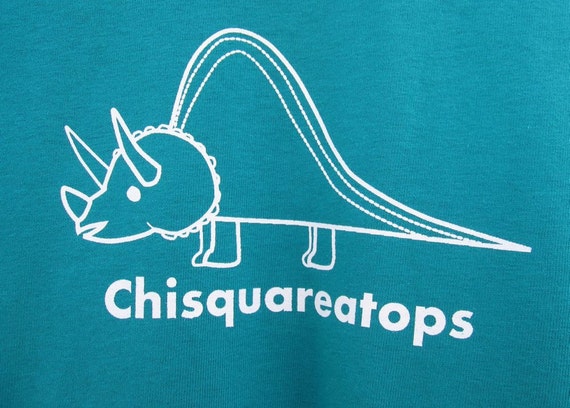
Nausicaa Distribution is an Etsy shop that sells handcrafted statistical and mathematical gifts. Some of them are simply cute statistical logos and images that they print on t-shirts, like "Chisquareatops."


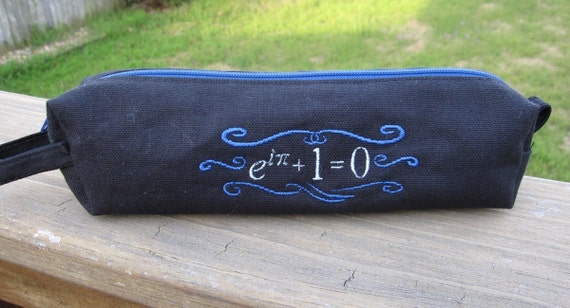
Others, like zippered pouches or drink cozies, have pi or equations embroidered on them.
Euler's Identity zippered pouch, found on Nausicaa Distribution's Etsy shop here.
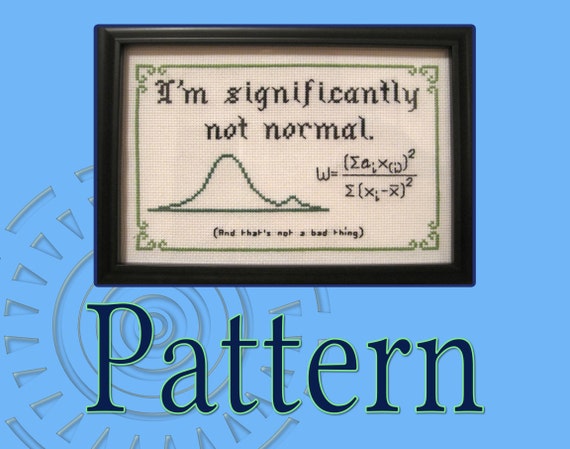
They also sell cross-stitch kits and patterns so you can make your own mathy crafts.
Shapiro Wilk test of normality cross-stitch pattern

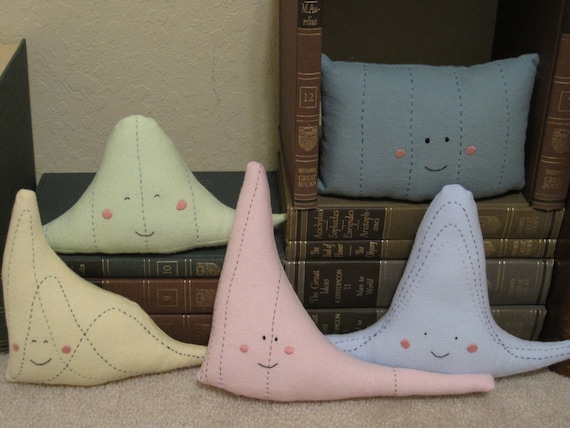
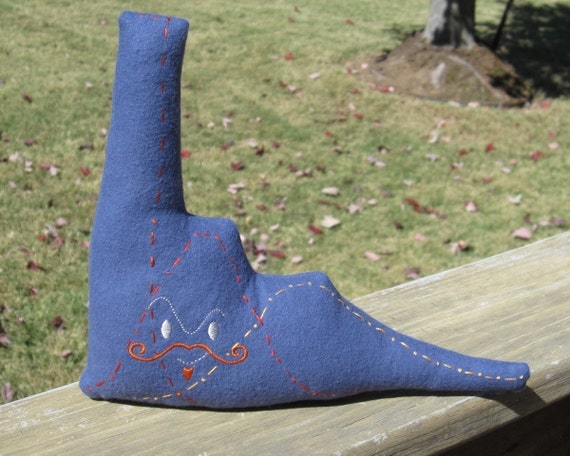
But perhaps most fun of all are the statistical distribution plushies! They range (range! See what I did there?) from the normal distribution, to chi-squared, to things I've never even heard of before like Erlang and Cauchy distributions. Just look at these cute little guys!
Nausicaa Distribution's Etsy shop: custom plushies
As far as I can tell, the plushies are sewn to be as accurate to the shape of these statistical distributions as possible, and include embroidered details of not only cute faces, but also variations in the distributions and/or standard deviation locations. It's a fun way to emphasize the inherent beauty in mathematical patterns, as well as the connection between textile crafts and math. The shop's owners, Nicole and Shannon, both have Masters degrees in Statistics. As Nicole describes it, "I have always enjoyed sewing and crafting, so opening an uber-nerd Etsy store seemed to be the perfect adventure." Hooray for nerdy crafting!
Evil Poisson Distribution! Mwahahaha!

You can find Nausicaa Distributions on Etsy, Twitter, Facebook, and BlogSpot!

Saturday, October 31, 2015

Binary Knit-Purl

Some fiber artists are beginning to draw parallels between knitting patterns and typical coding expressions. The structure of a knitting pattern can look quite similar to regular expressions in computer programming. In this featured blog post, Holly Korbey unravels the value of hands-on learning and creative craft that knitting can bring to the classroom. 


5352052564_f0def869e3_z

“Thinking is like cosmic knitting,” Waldorf school founder Rudolph Steiner wrote nearly one hundred years ago. Steiner  developed a comprehensive handwork curriculum for Waldorf students based on this idea, filled with knitting, sewing and woodworking, believing that “a person who is unskillful in his fingers will also be unskillful in his intellect, having less mobile ideas and thoughts.”Today’s Waldorf students still knit socks and whittle kitchen spoons and many Waldorf schools shun the use of technology. Those two things — handwork and technology — might seem at first glance to be at odds. But there’s a case to be made that handwork and computing  — and the kind of process that links the two — are more closely related than one might think.

When electrical engineering professor Dr. Karen Shoop of Queen Mary University in London took her first knitting workshop, she noticed immediately that knitting is very similar to writing computer code. “I noticed that knitting instructions are largely binary (like computers) – in other words, knit or purl,” she said. “More interesting were the knitting instructions, which read just like regular expressions [of code], used for string matching and manipulation when coding.” Shoop also recognizes that the earliest stages of computing were inspired by handwork: “Of course, computers ultimately started off partially inspired by weaving and the Jacquard loom, or earlier Bouchon’s loom. Arguably some of the earliest programmers were the people making the card/paper punch hole patterns for weaving patterns.”

Shoop explains that regular expressions are simple but powerful for both searching and simplifying code, and are used in both knitting and codingto read patterns. In the essay “Knitters and Coders: Separated at Birth?”she writes, “In knitting notation (assuming an even number of stitches) it looks like:

Row 1: *k1, p1; rep from * Rows 2: *p1, k1; rep from *, orRow 1: (K1, P1) rep to end Row 2: (P1, K1) rep to end.Repeat these 2 rows for length desired.

“Computers do not understand the words we used in our explanation above: words like ‘row,’ ‘repeat,’ ‘rep,’ ‘to,’ ‘from,’ ‘end,’ ‘length’ and ‘desired,’ for example.” But what if the knitting pattern were written in code? Using coding’s regular expressions, the knitting notation above turns into something like:

“((kp){10}\n(pk){10}\n){20}”

“Students often feel anything to do with computing (especially coding) is in a separate bubble,” she said. “And I wanted to show that we ‘code’ in our outside world.” Shoop even had a student — an enthusiastic knitter — who, as a senior class project, developed a digital tool that could recognize and generate new knitting patterns.  “We’re interested in how creativity can inform technology and help create and inform new tools and technologies to support the creative process,” she said.

Working with the hands can help both boys and girls develop thinking skills as well as fine motor skills, both of which are sorely needed in schools, says Michael Gurian, author of Boys and Girls Learn Differently. “For males [in general], handwork helps with fine motor skills, and for females [in general], it helps with diagrammatic thinking, found in the highest levels of geometry and physics,” he said. “School is fine motor-oriented, and we need more boys to get fine motor skills early.” Gurian would also be interested to see if handwork like knitting or woodworking would be a way to interest more girls in STEM fields, hoping that something like Shoop’s knitting project might serve as a guide for longitudinal studies finding a connection between handwork, engineering, and computer coding.Seeing how the hand is connected to learning goes beyond skills matching or STEM, but to the roots of human biology, says Stanford neurologist Frank R. Wilson, author of The Hand: How its Use Shapes the Brain, Language and Human Culture. In a keynote address given to the department of Humanities and Human Sciences at Point Park College, “Hand-made Minds in the ‘Digital’ Age,” Wilson implored teachers to incorporate more handwork into school work.

“It seems abundantly clear to me that, because of the process of co-evolution, the hand enjoys a privileged status in the learning process,” he said. “Being not only a catalyst but an experiential focal point for the organization of the young child’s perceptual, motor, cognitive, and creative world. It seems equally clear that as the child comes to the end of the pre-adolescent stage of development, the hand readily becomes a connecting link between self and community and a powerful enabler of the growing child’s determination to acquire adult skill, responsibility, and recognition.”

Shoop isn’t sure that k-12 students can learn anything specific from knitting (“Being a devil’s advocate,” she remarked, “does it have to teach anything? Knitting as making activity could be sufficient.”),  and warns that teaching large classes of students to knit does have drawbacks — including the time to check everyone’s work. Yet she admires how the tangible, sensory experience of knitting and the seemingly intangible world of computer coding are so closely linked. “I loved the fact that there is a perception (usually wrong) that there’s a world of computers (soulless, technical, ‘geeky’) and a completely different domain such as knitting (traditional, ‘female’, craft) – yet there is a clear overlap.”


Saturday, October 24, 2015

Not a Knot: Our friend, the Garter Stitch

As we say hello to scarf season, it's a great moment to go inside, take out our needles, and unpack the garter stitch.

Many knitters begin their fiber art journeys with the the garter stitch technique. It is arguably easy to make and understand. The repeating series of knit stitches can be used to create scarves, and many knitters talk about the meditative nature of the repetition. However, a closer look reveals a more complex side of the friendly stitch. 


An illustration of the garter stitch pattern. 

 When knitting, the working yarn comes around the needle and through a pre-existing stitch. A resulting loop is created, which the knitter then slips from the left needle to the right needle. The garter stitch provides an approachable conceptualization of what it means for a stitch to be a loop; the stitch is not a knot. 

Stitches are commonly talked about as knots, but as one can see in the picture above, the garter stitch pattern in created from a series of loops. In this sense, one can think of a hat as a spiral of stitches, not as a set of circles. Through my experience with knitting, I have discovered a deeper level of understanding when I slow down to actually look at the behavior of the wool.  


The working yarn come through the previous loop to make a new loop.


Garter stitches are sometimes viewed as elementary, or simplistic, but it is good for knitters to remember that the underlying structure of any stitch is far from simple. I suggest that the next time you find yourself knitting with a repetitive pattern, take a moment to focus your attention on the architecture and movement of the loops. You may be surprised by what you learn.

The garter stitch pattern is used to make a scarf out of chunky wools. 


Sunday, October 18, 2015

Cosplayers of the World, Rejoice! Joann's Is Getting Cosplay Fabrics!

This week, there was collective cheering in the cosplay community when JoAnn Fabrics announced that it was going to start carrying Cosplay Fabrics. Arising out of a collaboration between the Cosplay Fabrics company and well-known cosplayer Yaya Han, the fabric line will go on sale in Spring 2016. It will include 4-way stretch Spandex, PU leather, brocades, coutil, and even fabric that looks like armor!

The designers' motivation to make these fabrics more available to cosplayers came out of their own struggles to find appropriate fabrics for their costumes. Many times specialty fabrics are not available except in big cities, or online where a buyer can't feel the fabric to make sure it's the proper color, texture, or quality. Bringing these fabrics to Joann's will make many a cosplayer's life much easier.

Swatches of the available colors of Cosplay Fabrics' 4-way stretch Spandex. Courtesy of cosplayfabrics.com

The way I see it, this development has several implications:
  1. Cosplay is definitely "going mainstream." This move represents a huge fabric retailer's acknowledgement that cosplayers exist and are a sizeable-enough portion of its customer base that it is willing to cater to them directly. I'm so happy that such a fun and educationally rich hobby is getting this popular!
  2. If fabric-finding is easier, then cosplayers will spend more time working on making costumes, which is the most educationally relevant part.
  3. I hope the prices of these fabrics will not be marked up simply because they have the label "cosplay," since that risks marginalizing cosplayers with limited financial resources. On the other hand, monetary calculations are a legitimate mathematical practice that sewers engage in. Maybe an expensive cosplay fabric will encourage cosplayers to look elsewhere in the store for a similar but cheaper alternative, if one exists.
  4. Some of these specialty fabrics are likely to be more difficult to sew than ordinary fabrics like cotton. Cosplayers will have to learn the affordances of these new materials, like how to not stretch Spandex as you're running it through a machine (if you do, it will pucker). So while these might not be the most novice-friendly fabrics, if novices insist on using them, then they're likely to learn a lot more about sewing than if they used "easy" fabrics.
I'm really looking forward to seeing and feeling these fabrics for myself when they arrive at my local JoAnn's!